World Food Day 2026: Innovate today. Nourish tomorrow
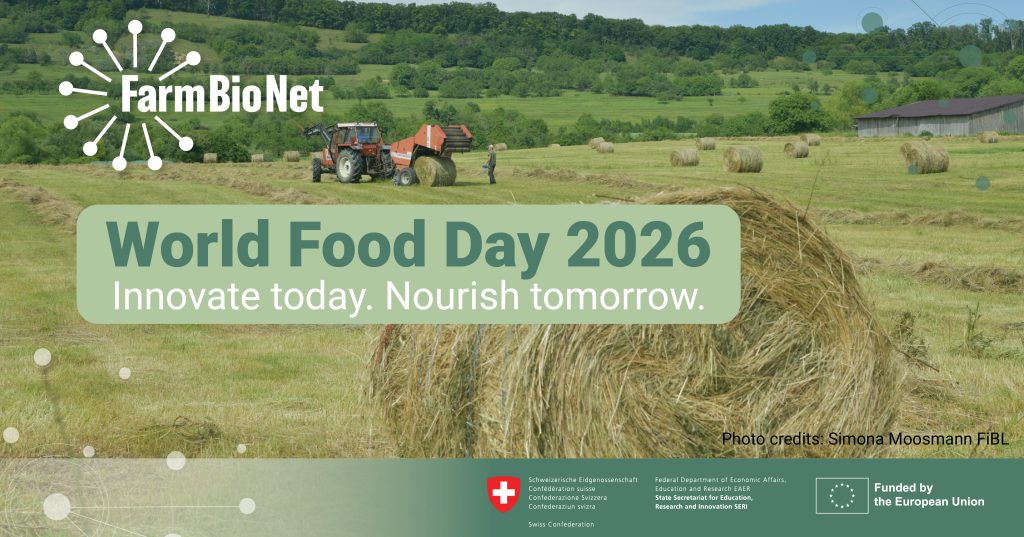
Every year on 16 October, World Food Day is celebrated around the world. The date marks the founding of the Food and Agriculture Organisation of the United Nations (FAO) on 16 October 1945. Since its establishment, FAO has worked to fight hunger and improve food production and access to food worldwide. More than 80 years later, this mission remains as important as ever.
From a Hungarian proposal to a global observance
The idea for World Food Day came from Hungary. A delegation led by Dr Pál Romány, Hungary’s Minister of Agriculture and Food at the time, proposed dedicating a day to food and its importance worldwide. In November 1979, FAO member countries agreed to establish World Food Day at the organisation’s 20th General Conference. The first celebration took place in 1981, with the theme “Food comes first”. Since then, a new theme has been chosen each year to draw attention to important issues related to food and agriculture.
Today, World Food Day is marked through hundreds of events around the world, bringing together governments, local authorities, businesses, civil society organisations, the media and young people.
Hunger in 2026: real progress, uneven gains
The State of Food Security and Nutrition in the World 2026, launched by FAO and partner UN agencies on 21 July 2026, shows some progress. Global hunger fell for the third year in a row, to around 645 million people in 2025, or 7.8% of the world’s population. But progress is uneven and fragile. Almost one in three people still cannot afford a healthy diet, and the report projects that 510 to 520 million people may still face hunger in 2030.
Hunger is not only about how much food the world produces. It also depends on which crops are grown, how they are grown, and whether farming systems can cope with drought, floods, pests and rising costs.
Biodiversity plays a central role here. According to FAO’s report on biodiversity for food and agriculture, of the roughly 6,000 plant species cultivated for food, fewer than 200 make a substantial contribution to global food output, and just nine account for 66% of all crop production. The narrower the range of crops, the more exposed the food supply becomes. Pollinators, soil organisms, hedgerows and wild plants around fields all support yields that are easy to take for granted.
What "Innovate today. Nourish tomorrow." means for farming
FAO’s message for 2026 is that forward-thinking solutions, combined with traditional knowledge and inclusive approaches, can help everyone get enough varied, safe and nutritious food while protecting the planet for future generations.
Innovation in this sense is broader than new technology. It can be a digital tool that helps a farmer monitor soil moisture, but it can also be a better way of sharing what works between farms, regions and countries. Much of the knowledge needed to farm well alongside nature already exists. It is held by farmers who have managed their land for generations, by advisors who visit many farms, and by researchers who measure what changes over time. Bringing these groups together is an innovation in its own right.
Food security is a shared responsibility
World Food Day is a reminder that food security is a shared responsibility. Policymakers set the conditions, researchers provide evidence, farmers make daily decisions on the land, and consumers shape demand through what they buy and how much they waste. Each role matters, and none of them works well alone.
How FarmBioNet contributes
Innovation in agriculture does not always mean introducing new technology. Sometimes, it means finding better ways to apply existing knowledge, adapting proven practices to local conditions and helping farmers learn from one another.
This is where FarmBioNet comes in. Funded by the European Union’s Horizon Europe programme, the project brings together farmers, researchers, advisers and other stakeholders to identify and share effective biodiversity-friendly farming practices across Europe.
Through farm visits, workshops and training activities, members of our National Networks exchange practical experiences and discuss how biodiversity-friendly practices can be applied in different farming contexts. The knowledge generated and collected through these activities is shared more widely, helping other farmers discover approaches they can consider for their own farms.
This World Food Day, the message is clear: innovation is not only about discovering new solutions. It is also about helping effective solutions reach the people who can put them into practice.