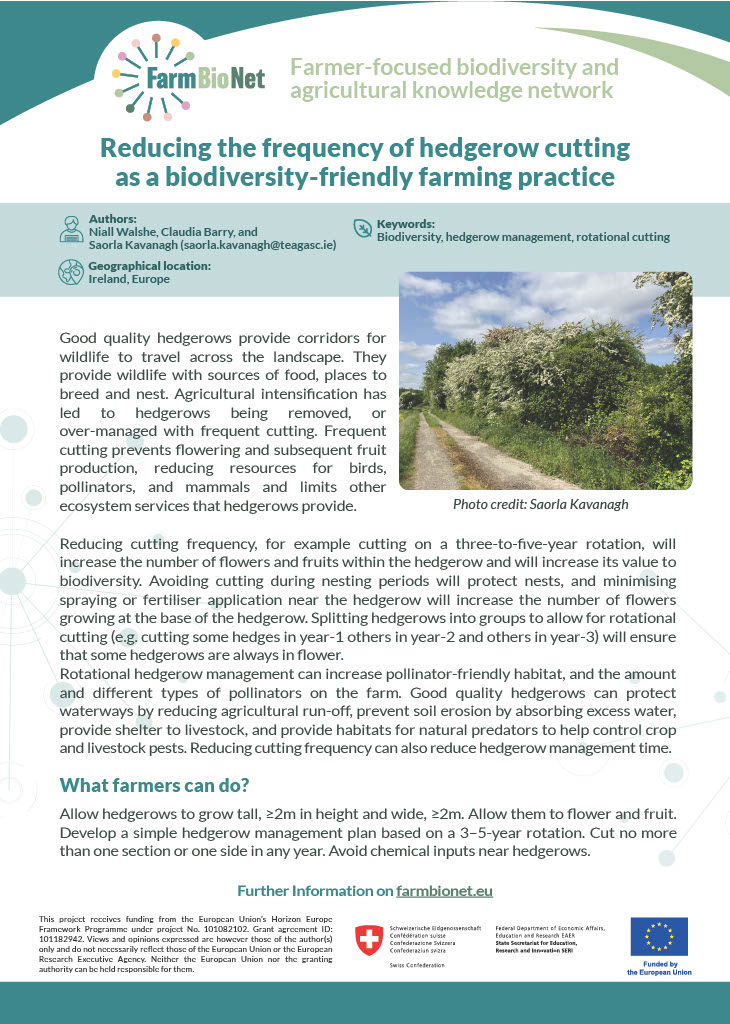
Reducing the frequency of hedgerow cutting as a biodiversity-friendly farming practice
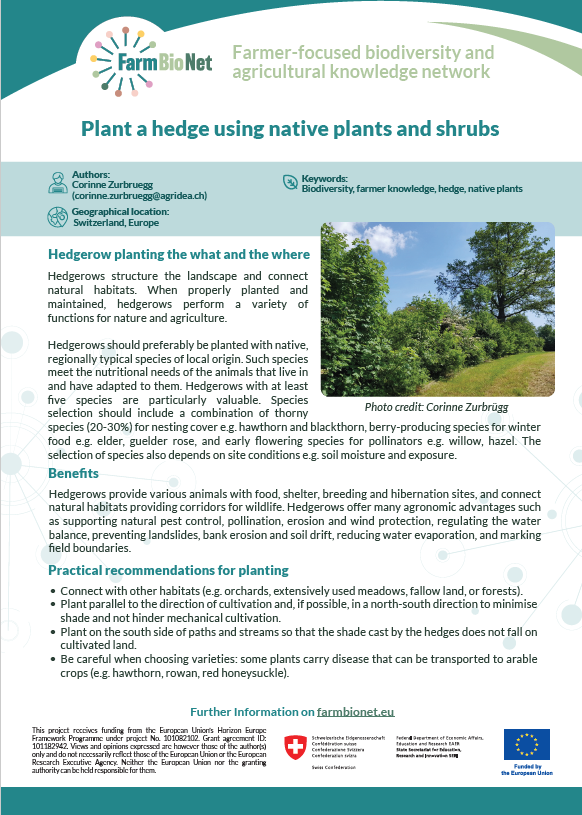
Plant a hedge using native plants and shrubs
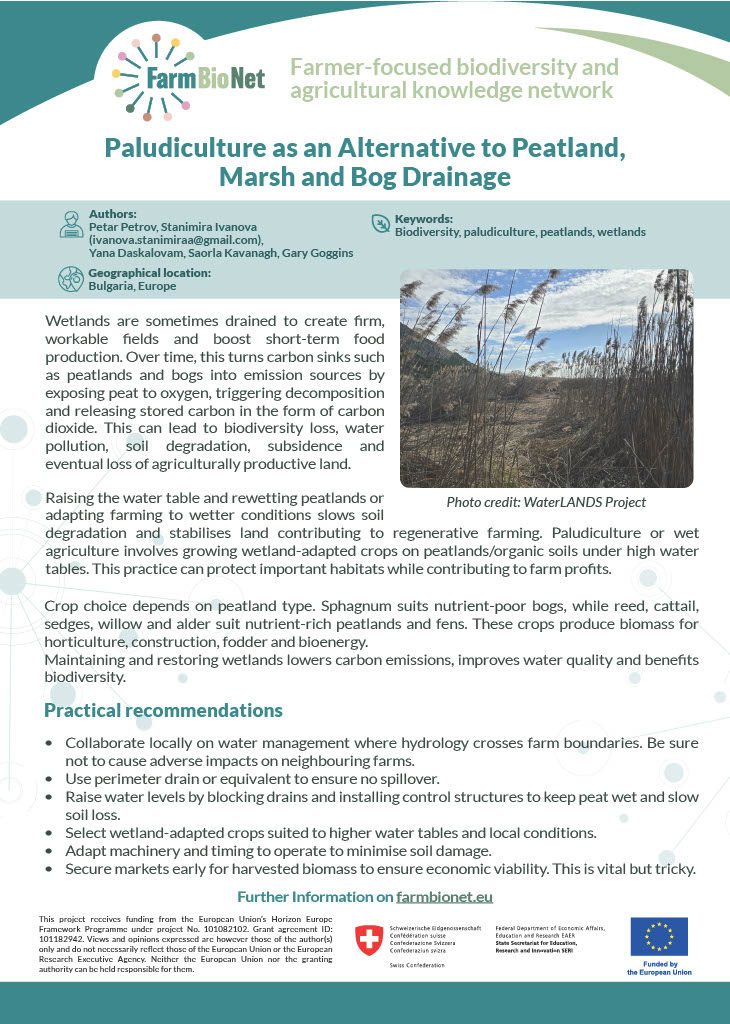
Paludiculture as an Alternative to Peatland, Marsh and Bog Drainage
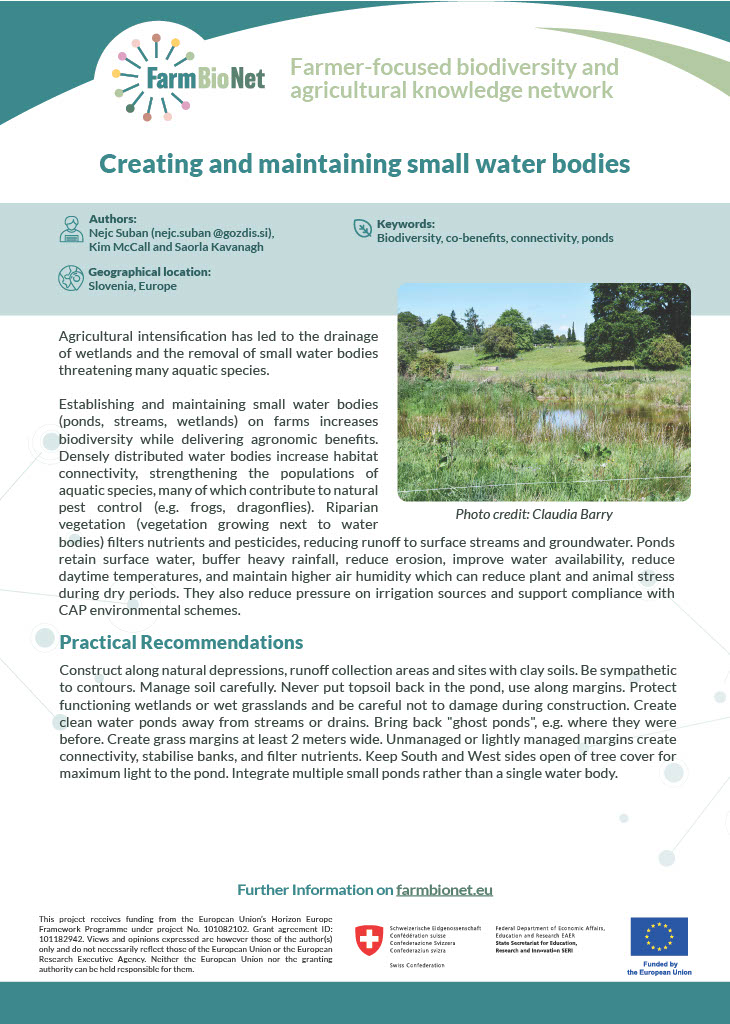
Creating and maintaining small water bodies
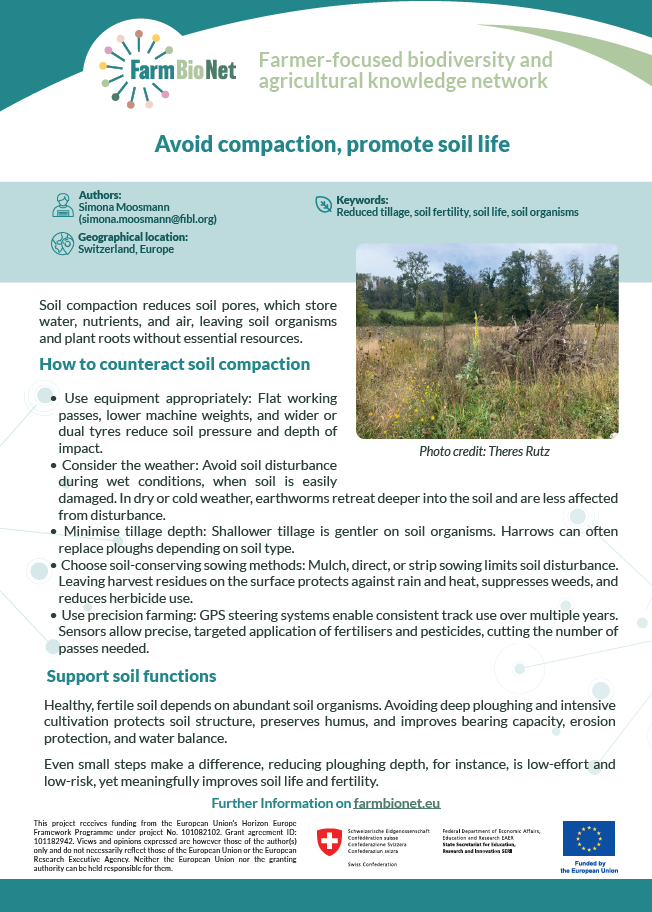
Avoid compaction, promote soil life
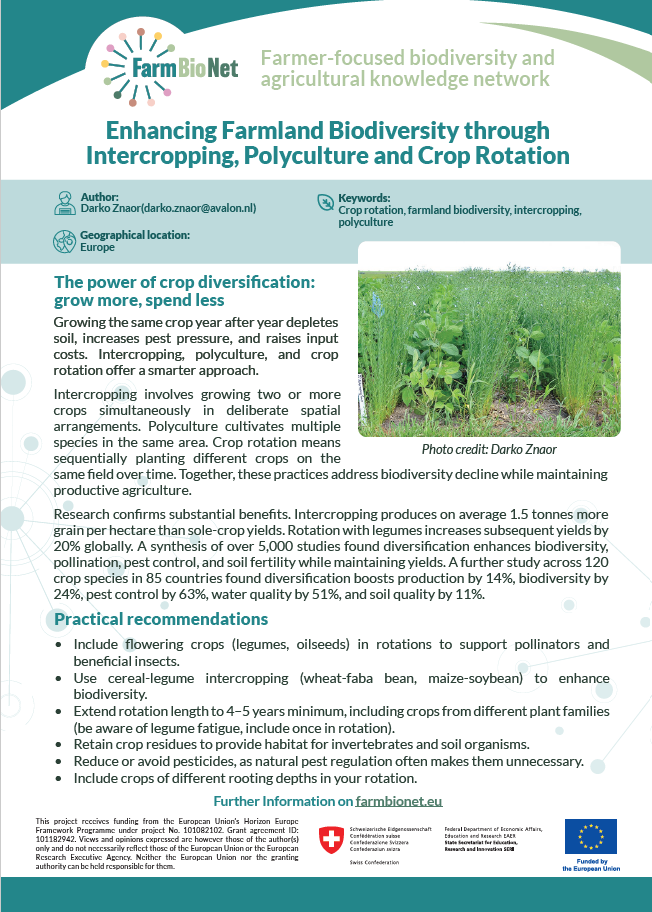
Enhancing Farmland Biodiversity through Intercropping, Polyculture and Crop Rotation
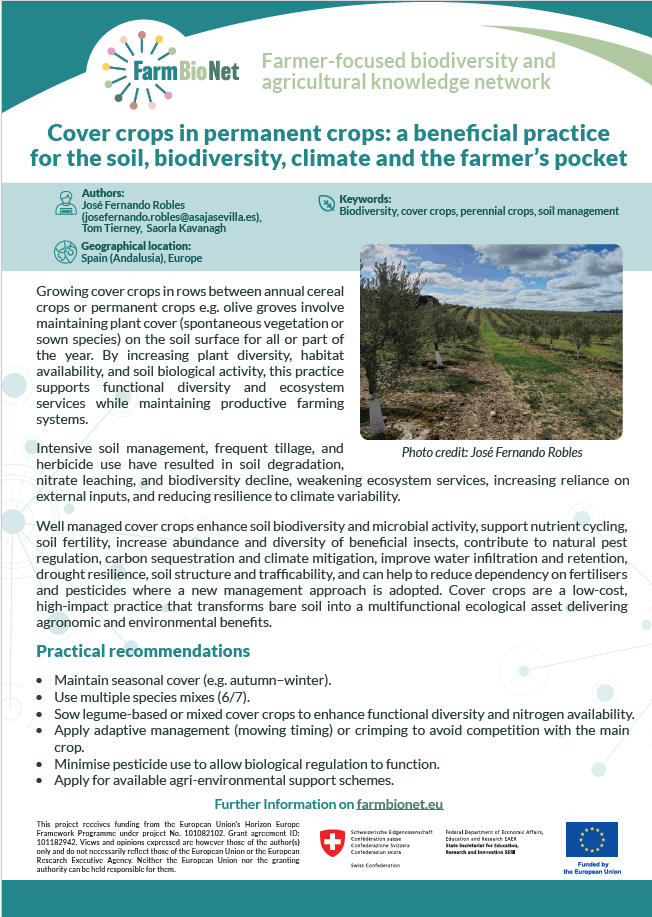
Cover crops in permanent crops: a beneficial practice for the soil, biodiversity, climate and the farmer’s pocket
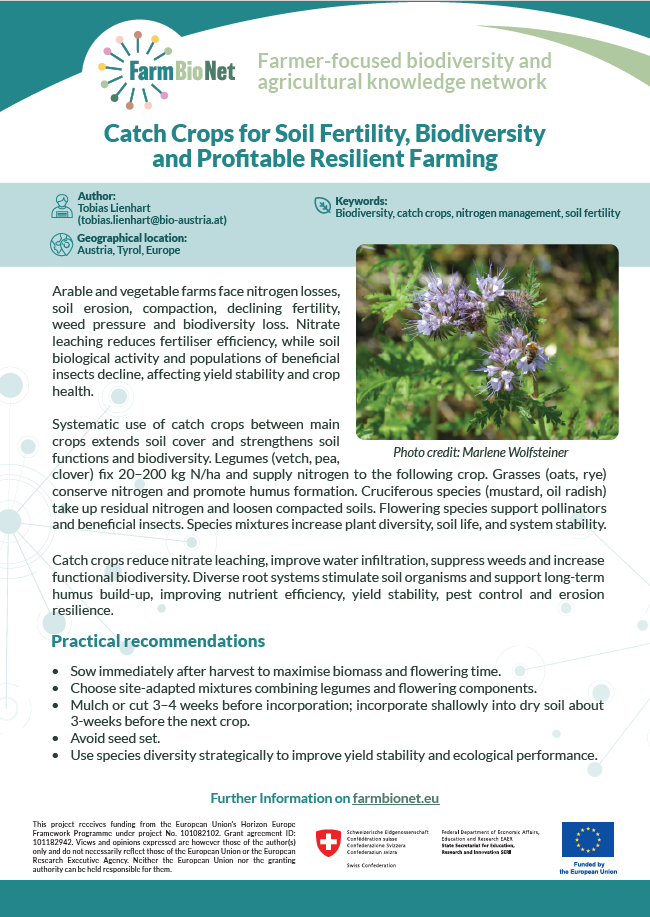
Catch Crops for Soil Fertility, Biodiversity and Profitable Resilient Farming
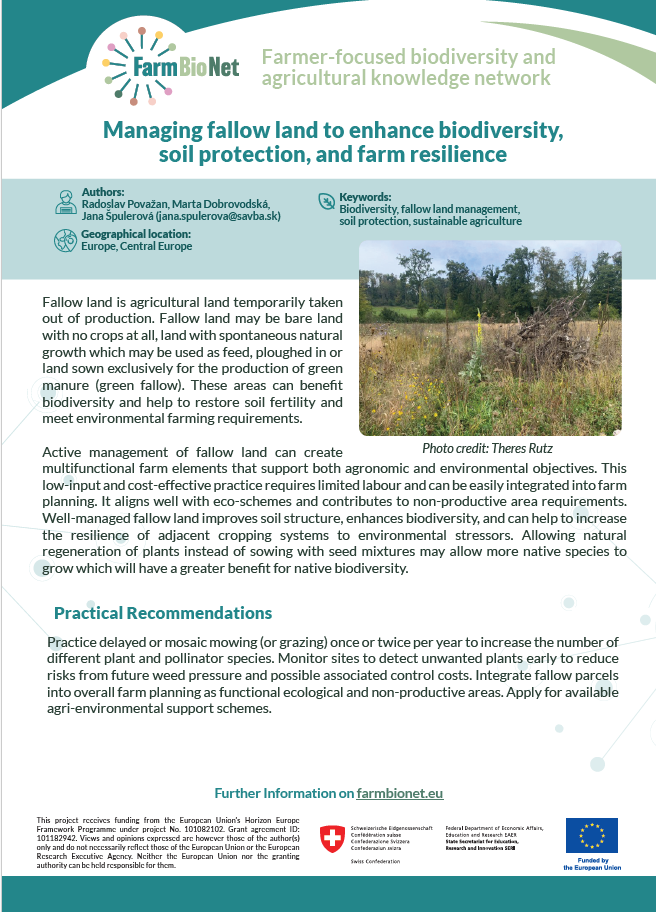
Managing fallow land to enhance biodiversity, soil protection, and farm resilience
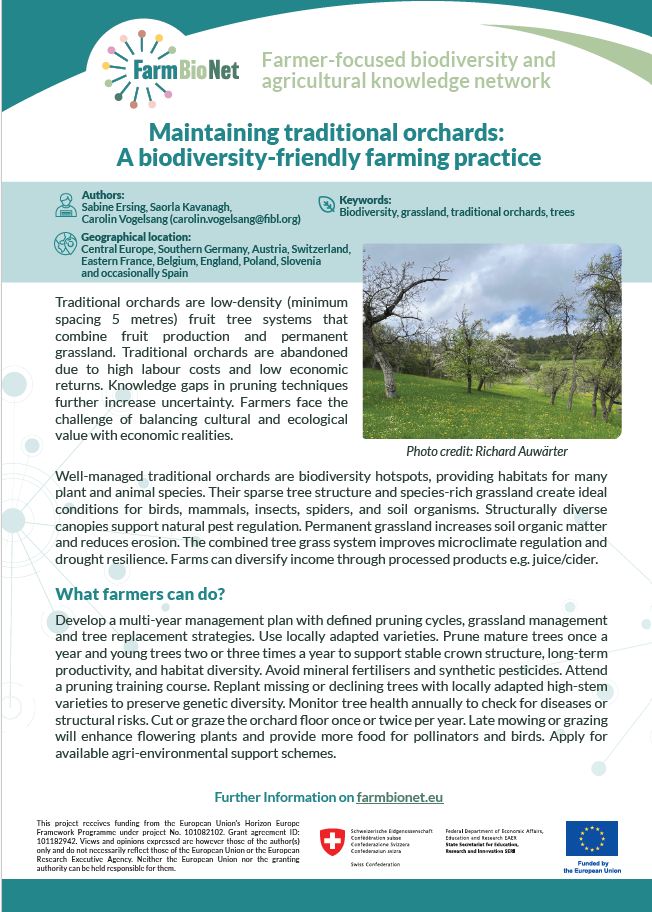
Maintaining traditional orchards: A biodiversity-friendly farming practice
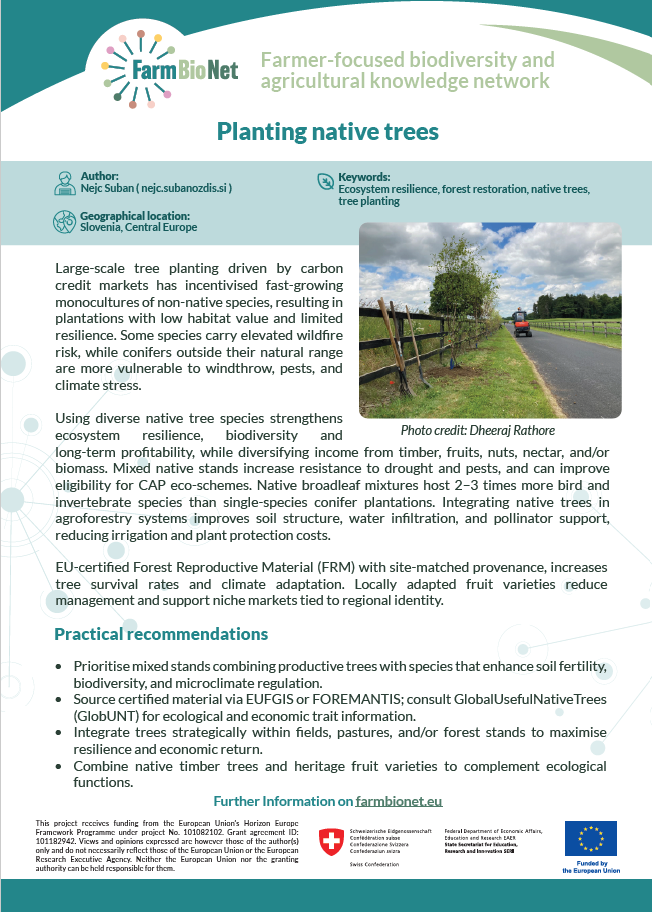
Planting native trees
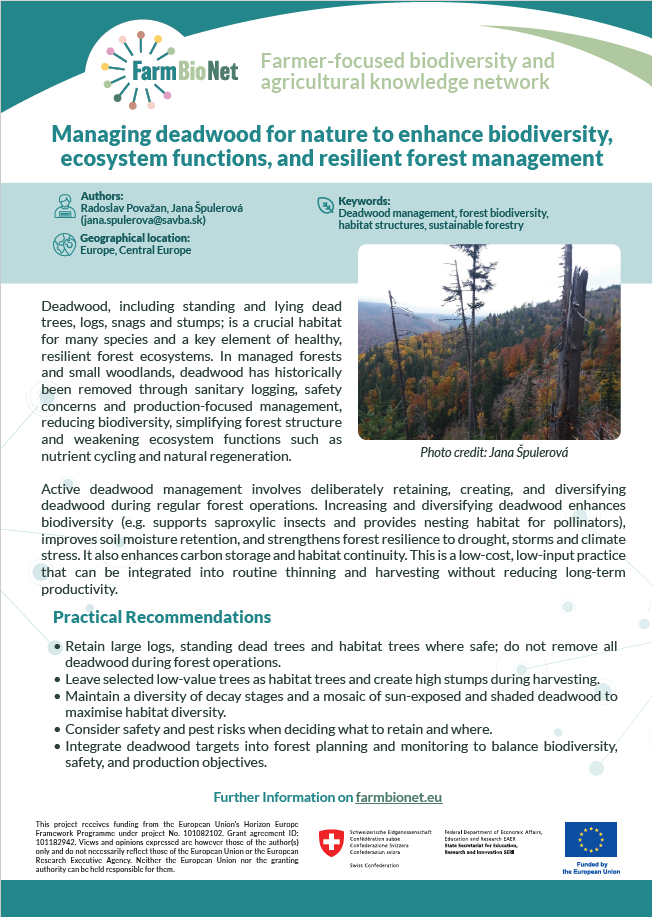
Managing deadwood for nature to enhance biodiversity, ecosystem functions, and resilient forest management
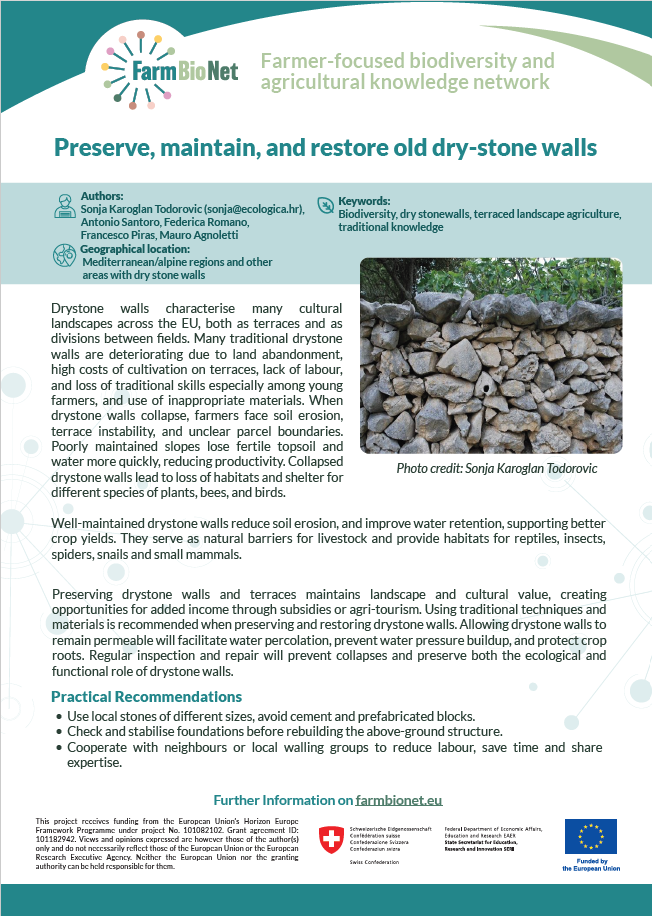
Preserve, maintain, and restore old dry-stone walls
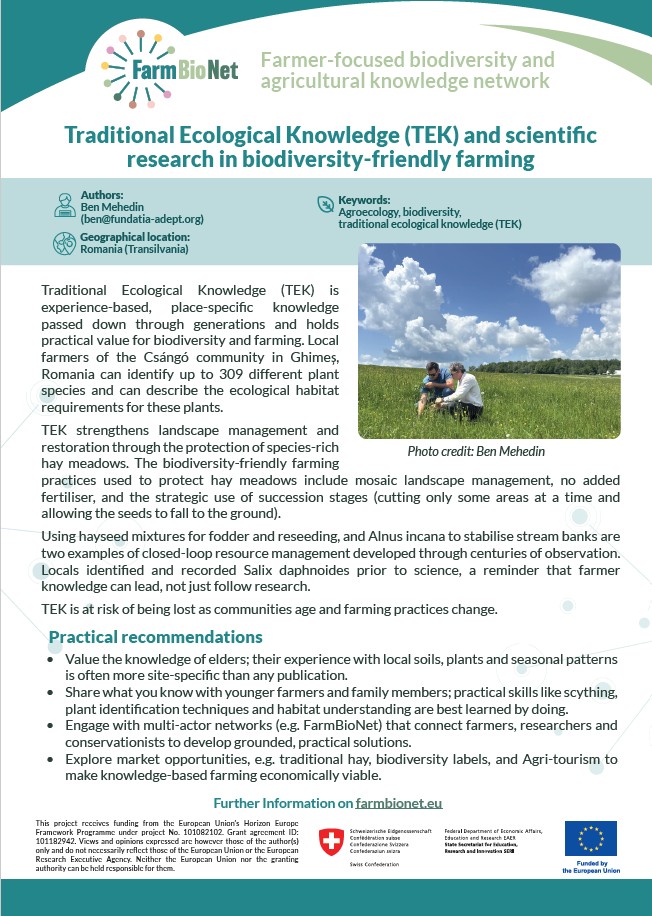
Traditional Ecological Knowledge (TEK) and scientific research in biodiversity-friendly farming
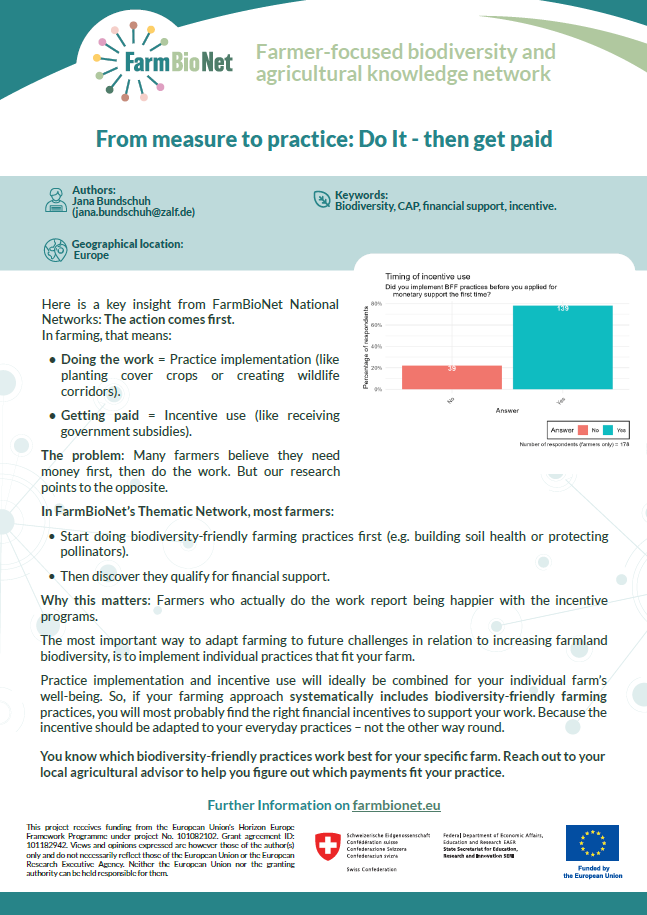
From measure to practice: Do It - then get paid
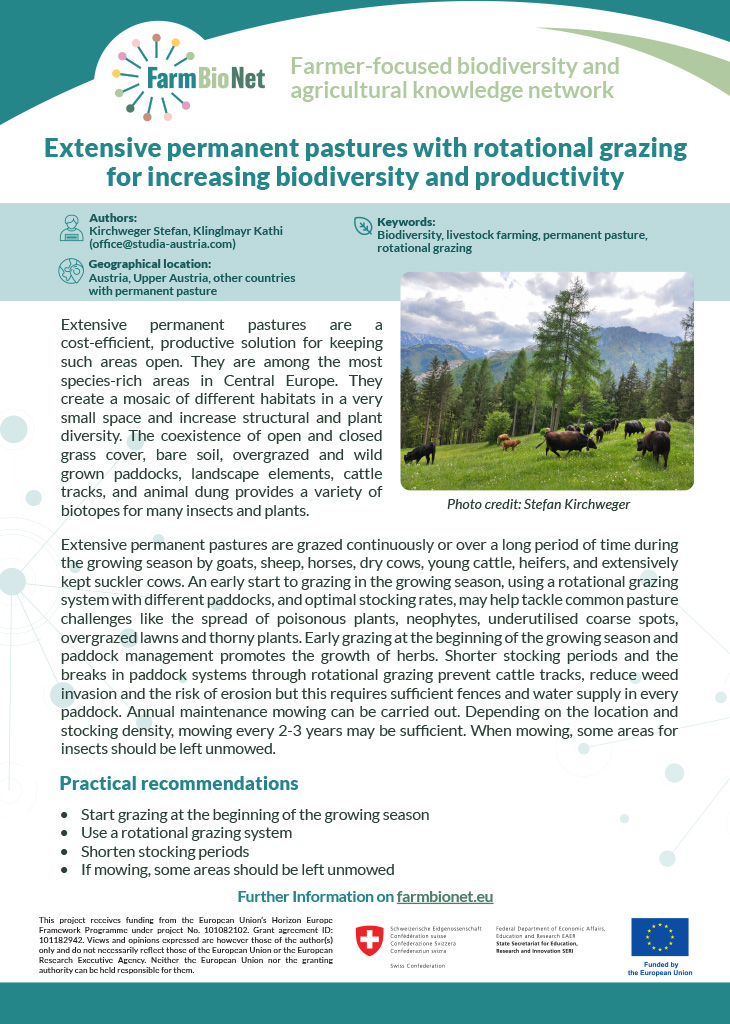
Extensive permanent pastures with rotational grazing for increasing biodiversity and productivity
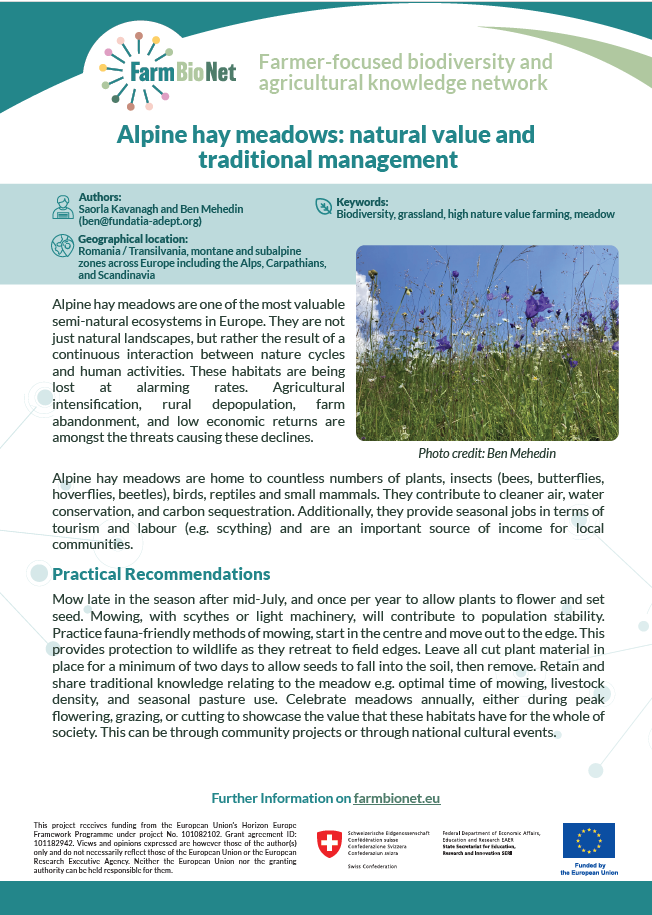
Alpine hay meadows: natural value and traditional management
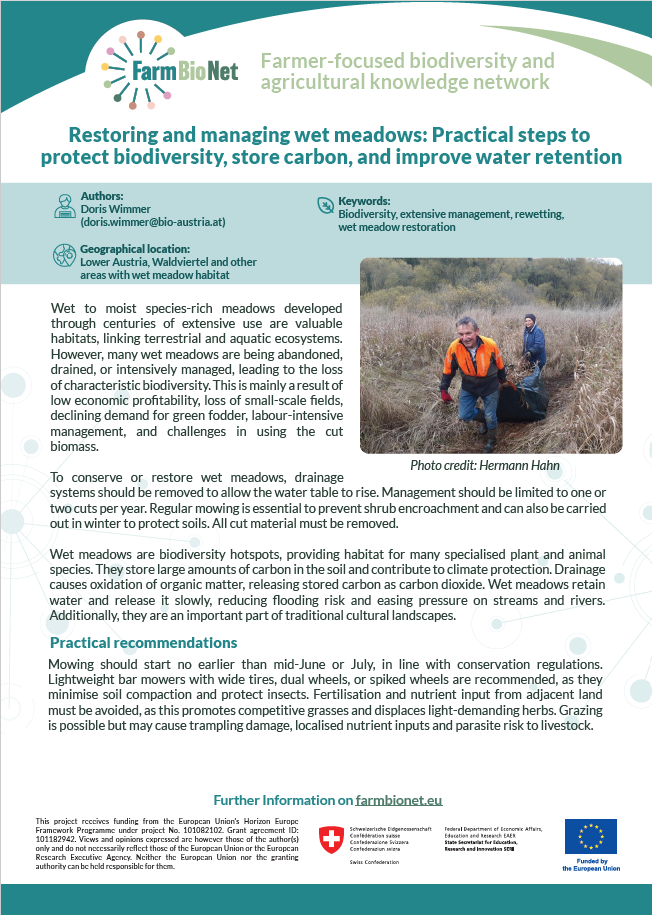
Restoring and managing wet meadows: Practical steps to protect biodiversity, store carbon, and improve water retention
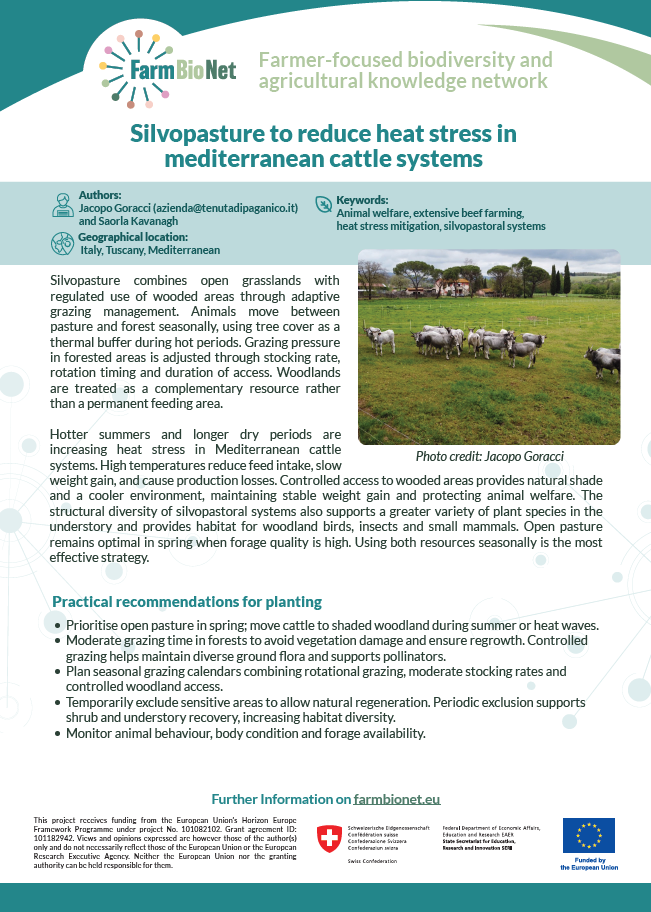
Silvopasture to reduce heat stress in mediterranean cattle systems