Second FarmBioNet Capacity Building Training: Strengthening Communication Impact
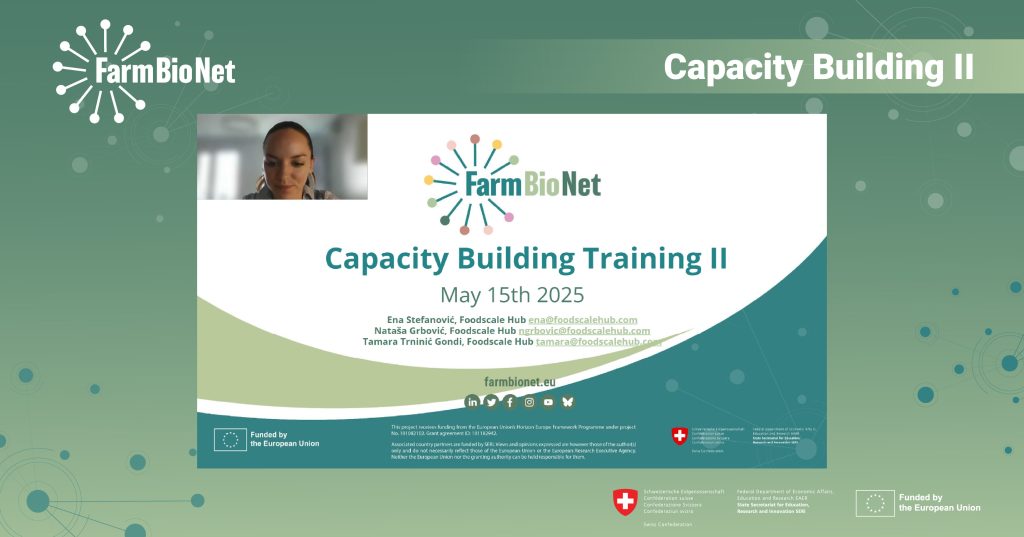
On 15 May 2025, partners from across the consortium gathered online for the second capacity building training session, hosted via Zoom and facilitated by SUSKE, TEAGASC, and Future Systems Hub (FSH). The goal of the session was to strengthen skills in outreach, dissemination, and stakeholder engagement within the project.
Focus on Strategic Communication
The first part of the training, led by FSH, focused on effective communication for social media. Participants explored how to structure impactful posts using a clear hook – message – call to action approach, ensuring consistency across platforms such as LinkedIn, X, Instagram, and Facebook. Emphasis was placed on storytelling, clarity, and tailoring messages to target audiences rather than focusing on the organisation itself.
The importance of visual identity was also highlighted, including the use of high-quality images, consistent branding, and platform-specific formats such as carousels for LinkedIn. Participants were reminded that visuals should support engagement and that tagging relevant organisations and individuals increases reach and visibility.
Engaging Audiences and Expanding Reach
A key discussion point was how to better reach farmers and other key stakeholders. ADEPT presented strategies such as working with farmer champions, advisory services, agricultural networks, student associations, and media channels including press, radio, and social media.
Participants also discussed the value of combining digital outreach with face-to-face engagement, highlighting that trust-building within farming communities often depends on personal connections and credible local voices.
Crafting Newsletters
The second half of the session focused on newsletter development and Mailchimp training. Partners reviewed best practices for structuring newsletters, including clear objectives (inform, engage, convert) and well-organised content sections. Important attention was given to GDPR compliance, ensuring that members are informed before receiving newsletters. Participants also discussed flexibility in newsletter timelines and the importance of maintaining regular communication with network members
Interactive Exercises and Practical Learning
The session included interactive exercises where participants worked on drafting their next social media post and newsletter content. Real examples from partner networks were reviewed, including suggestions for improving structure, visuals, and messaging clarity.
Looking Ahead
The session concluded with agreed follow-up actions, including the development of shared messaging resources, review of communication materials, and confirmation of newsletter timelines.
This training marks another step in strengthening the consortium’s communication capacity, ensuring that project results reach and engage farmers, researchers, policymakers, and the wider public effectively.