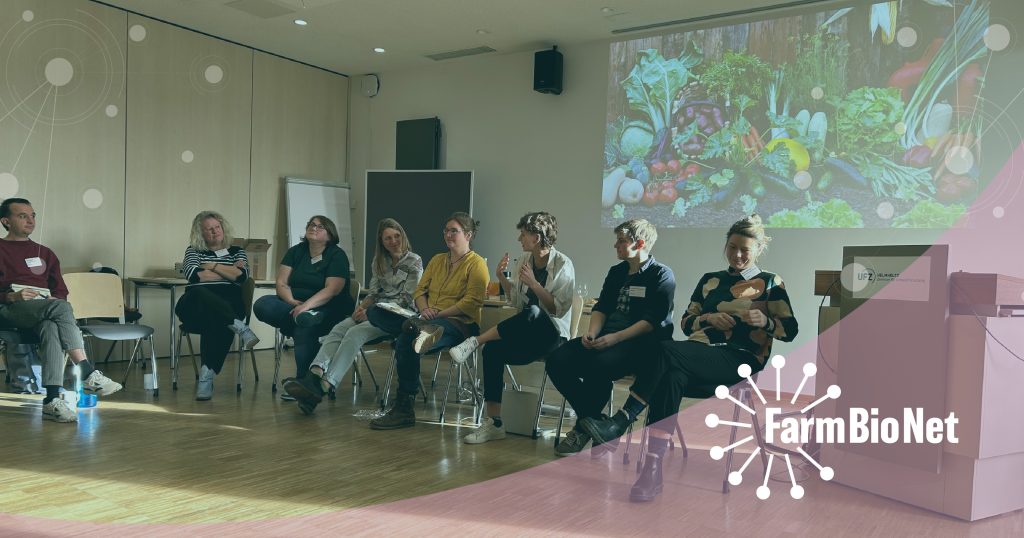
FarmBioNet’s parrtner Jana Bundschuh from Leibniz-Centre for Agricultural Landscape Research (ZALF) , was presenting FarmBioNet and specifically its 12 networks on biodiversity-friendly farming at the round table, PartWiss 25, in November in Leipzig, Germany.
A Conference on Best Practices in Participatory and Transdisciplinary Research
The conference was the fourth of its kind and is a networking space to strengthen participation in science. This year’s theme was: “Researching together – impulses from citizen science, participatory and transdisciplinary research.”
Approximately 400 participants discussed about the future of citizen science, participatory and transdisciplinary research. Exchanged centred around successes, good practice experiences and how new knowledge can address social problems.
Twelve National Networks Across Europe
Farming and Biodiversity National Networks have been established in twelve partner countries: Ireland, Austria, Bulgaria, Croatia, Spain, Italy, the Netherlands, Romania, Slovenia, Slovakia, Germany, and Switzerland. The networks bring together a diverse group of stakeholders, including farmers, agricultural organisations, researchers, NGOs, business representatives, policymakers, and government officials.
Comparing Successes and Challenges of Participatory Research Projects
Jana Bundschuh took part in a roundtable on citizen science in food and agriculture facilitated by Leo Mensel from the European Citizen Science Association (ECSA), presenting citizen engagement activities within the PataFEST project.
Next to FarmBioNet, three citizen science or farmer focused research projects were represented: • Gardener Valérie van Dijck from the ‘De Veldhof’ in Joppe in the Netherlands and researcher Charlotte Voigt from BOKU University in Vienna, Austria, both part of the SWIFT project, used participatory video in a storytelling process among female agroecological farmers. • Annika Kreikenbohm from the office city2science in Germany and Nicola Oswald from the Sustainability Lab of the University of Würzburg in Germany were sharing the success of exchange and co-design in tandems between scientists and regional leaders of city institutions. • Larissa Müller was reporting from her work with citizens and cities in flood-threatened regions in Germany and colleagues from tech-focused science fields.
Especially the scale of participatory research projects and the challenges of integrating practitioners into the research process and in exchange and dissemination formats were discussed.
The Pace of Large Consortia Limits Trust -Building with Practitioners
One of the insights of the female and LGBTQIA+ panel and the predominantly female audience was, that the pace of large consortia often limits the possibility of building trust and long-term partnerships between scientists and the hands-on community.